Direct answer
Map a garden before choosing plants by recording direct sun, dappled shade, full shade, reflected heat, wind and irrigation conditions at several useful times. Divide the site into exposure zones rather than labelling the whole garden sunny or shaded. Note how buildings, boundary walls, pergolas and existing trees move shadows through the day. Then select plants against the conditions of each zone, their mature size and the available care. The result should be a site-based planting schedule, not a palette copied from a single photograph.
Observe the garden as it is used
Choose observation times that match both solar change and daily routines: early morning, late morning, mid-afternoon and near sunset where practical. Record where people sit, children play, pets move, doors open and paths remain busy. A planting bed that is shaded at breakfast may receive intense afternoon sun, while a south- or west-facing wall may add reflected heat after direct sun moves away. Photographs from fixed viewpoints make comparisons clearer than memory.
Separate light from heat and drying exposure
Two areas with similar hours of sun can behave differently. Pale walls and paving can reflect heat and light. Narrow side passages may be shaded but still hot, dry or windy. Overhanging trees can reduce sun while competing for water and root space. Pool splash, air-conditioning discharge and roof runoff create additional local conditions. Record these influences beside the sun map so plant selection addresses the whole microclimate rather than a simple light category.
Use clear exposure zones
Create a plan with a small number of practical zones such as strong afternoon exposure, gentler morning sun, shifting dappled shade, bright shade and deep shade. Add notes on soil volume, drainage, access and nearby services. Avoid pretending that zone boundaries are exact lines; they are working areas that help compare plant needs. Dubai Municipality presents the Dubai Building Code as a unified minimum framework for health, safety, welfare, convenience and sustainability, while project-specific landscape, access and service requirements still need the relevant professional review.
Connect the map to mature plant size
Select for mature form, not the size delivered from the nursery. Check future canopy, root space, spread and the relationship to walls, paths, windows, pools and service equipment. A plant suitable for the light may still be unsuitable because it narrows a path, blocks maintenance access or outgrows the available soil volume. Use repetition within each exposure zone to create coherence, then vary height and texture where the conditions support it.
Planning example
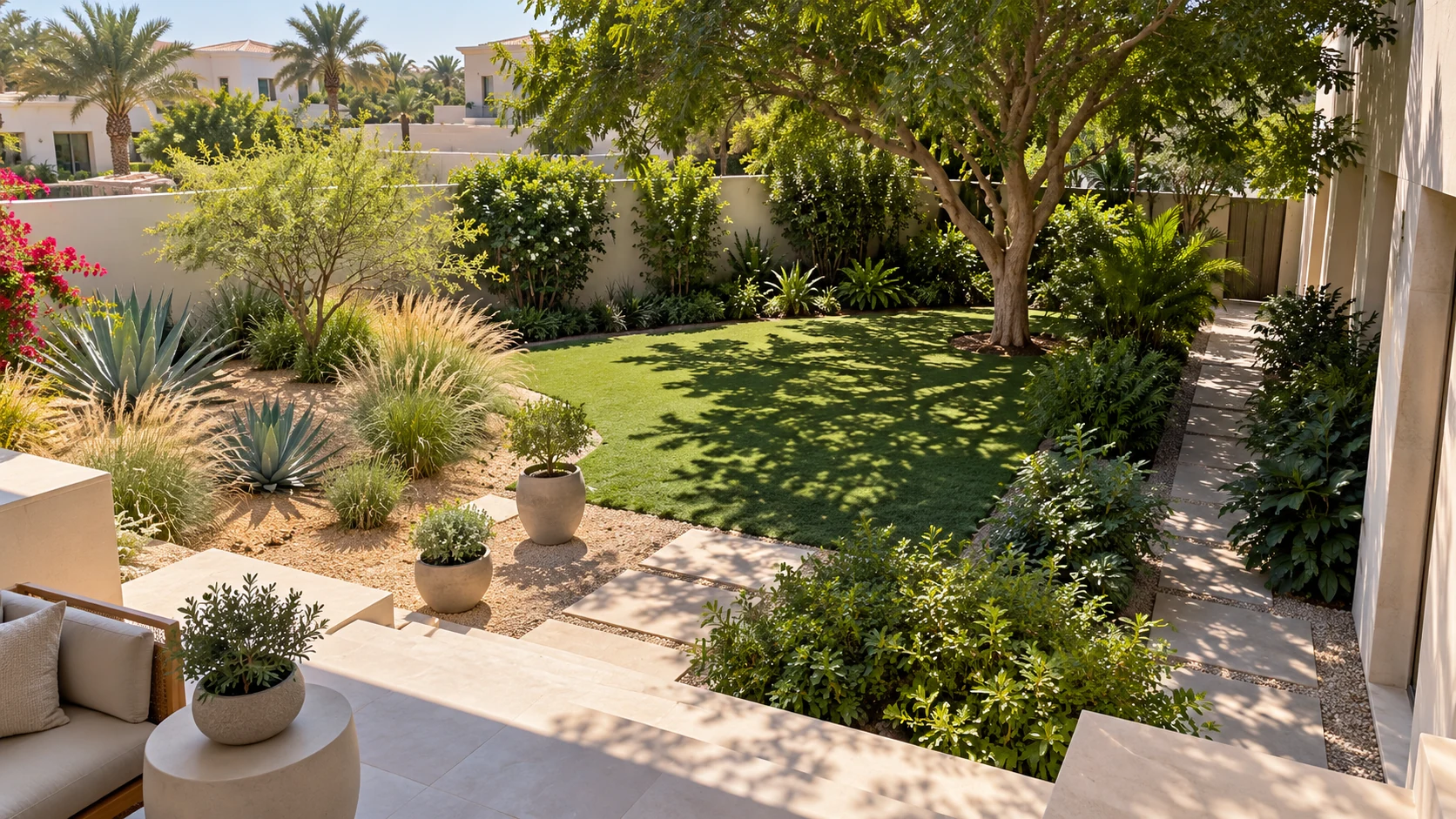
Planning example: a villa garden has a sunny lawn, a west boundary, an established tree and a shaded side return. Morning observations show gentle light along the house, while afternoon photographs reveal strong reflected heat at the west wall. The tree creates moving shade but its root zone is dry. The planting plan responds with a heat-tolerant boundary palette, a separate group for the tree's dappled dry shade and shade-tolerant planting along the side return. Irrigation zones are reviewed against these different conditions before quantities are ordered.
Build a planting-brief checklist
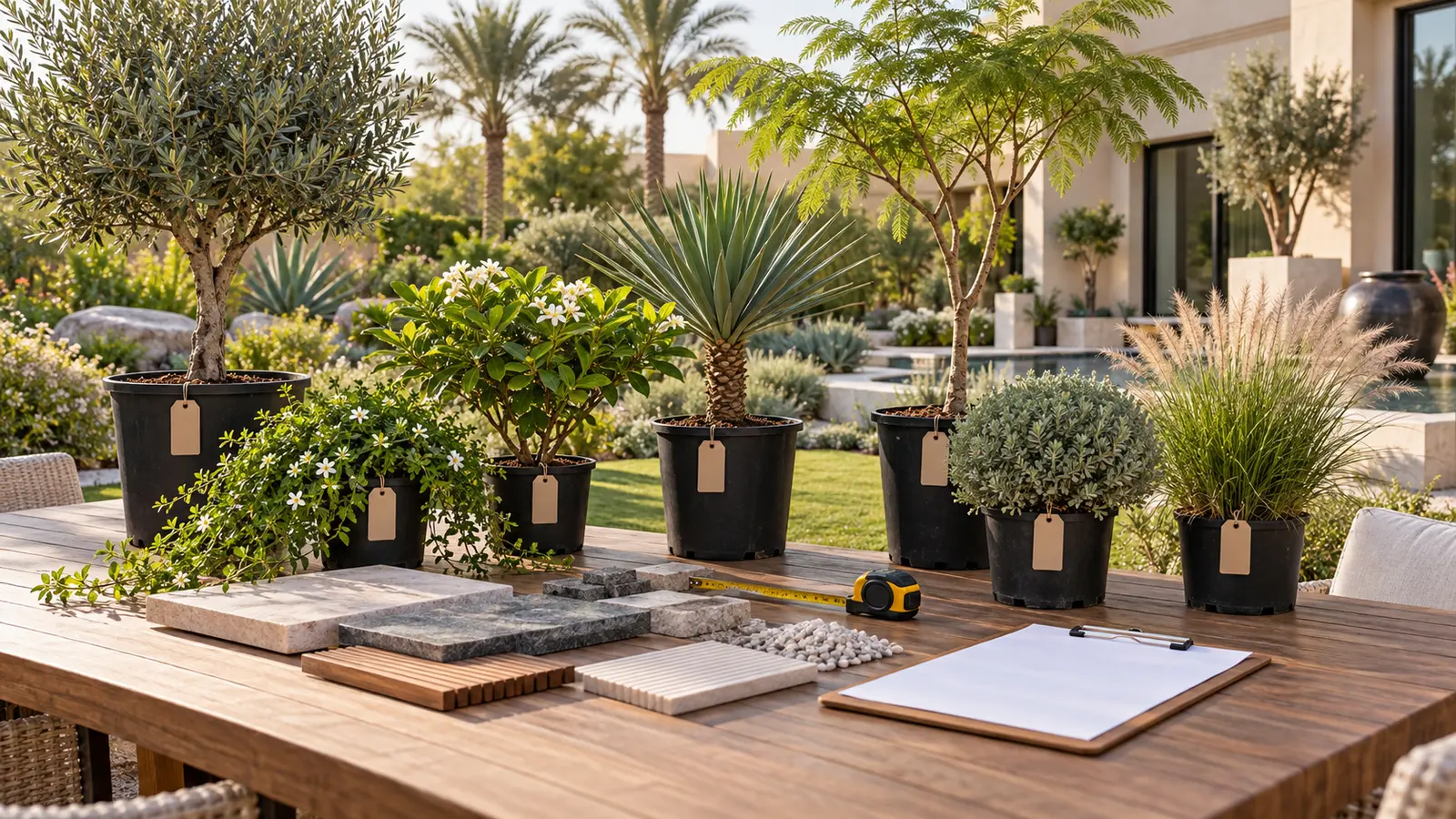
Give the landscape designer or nursery a site record rather than only inspiration images. Identify the appearance and uses you want, but let the conditions narrow the species list. Ask for botanical names, quantities, supplied sizes, mature dimensions, spacing, soil preparation and establishment care. Confirm substitutions against the same criteria instead of accepting a visually similar plant with different exposure or water needs.
- Fixed-view photographs at several times
- Direct, dappled and full-shade zones
- Reflected heat and wind exposure
- Existing trees, roots and retained planting
- Soil volume, drainage and level constraints
- Irrigation supply and proposed zone relationship
- Mature size and maintenance access
- Establishment and long-term care responsibilities
Limitations and seasonal change
A short observation period cannot show every seasonal condition. Sun angles, deciduous canopy, neighbouring growth and future structures can alter exposure. Plant performance also depends on soil, water quality, drainage, planting quality and establishment care. This guide does not replace horticultural assessment, irrigation design or specialist advice for significant existing trees. Any excavation or planting near buried services, structures or pool systems requires coordinated professional review.
Next step
Spend one clear day recording the garden from fixed viewpoints, then repeat the most uncertain areas at another useful time or season. Mark exposure and microclimate notes on the base plan, add existing features and maintenance access, and issue that map with the planting brief. Review the proposed schedule zone by zone before ordering, and keep substitutions subject to the same mature-size, exposure, irrigation and care criteria.
Sources & further reading
Make this useful for your project.
A review of your property and priorities can turn general guidance into a defined brief.
Explore Planting and softscapeDiscuss your project