Direct answer
A nursery substitution brief should define what makes an alternative acceptable beyond having a similar appearance. It should compare botanical identity, mature height and spread, growth habit, light and water needs, soil tolerance, maintenance, root condition, supplied size and quantity. It should also state who may approve a change, what evidence the nursery must provide, and how irrigation or spacing changes are handled. Substitution is normal when living stock varies, but it should be a controlled design decision. Otherwise a convenient replacement can change shade, privacy, seasonal character, water demand and long-term maintenance across the garden.
Define the non-negotiable design role
For each scheduled plant, describe its role in the composition: canopy tree, filtered screen, focal specimen, low edge, groundcover mass, fragrance, seasonal flower or habitat value. State which qualities are essential and which can flex. A screen plant may need a particular mature density and base coverage; a specimen tree may depend on trunk form and branching rather than nominal height. This avoids the vague instruction to supply similar. Dubai Municipality’s 2026 Greenery and Plantation Manual promotes a consistent approach to planning and maintaining green spaces, including water-efficient design and native or adaptive species. A private garden brief can apply those principles at project scale.
Compare performance, not just names
Prepare a substitution matrix with the specified and proposed plants side by side. Compare mature dimensions, habit, growth rate, sun and shade response, heat and wind exposure, salinity sensitivity where relevant, irrigation demand, flowering or fruiting, litter, thorns, toxicity concerns for the household, and expected maintenance. A plant from the same genus may behave very differently. If the substitute changes mature spread, revisit spacing and quantities rather than squeezing the original count into the bed. If it changes irrigation demand, review the zone design. The landscape designer should approve the complete consequence, not simply the botanical name.
- Mature form and size
- Site and exposure tolerance
- Water and maintenance needs
- Household and use considerations
Specify the supplied specimen clearly
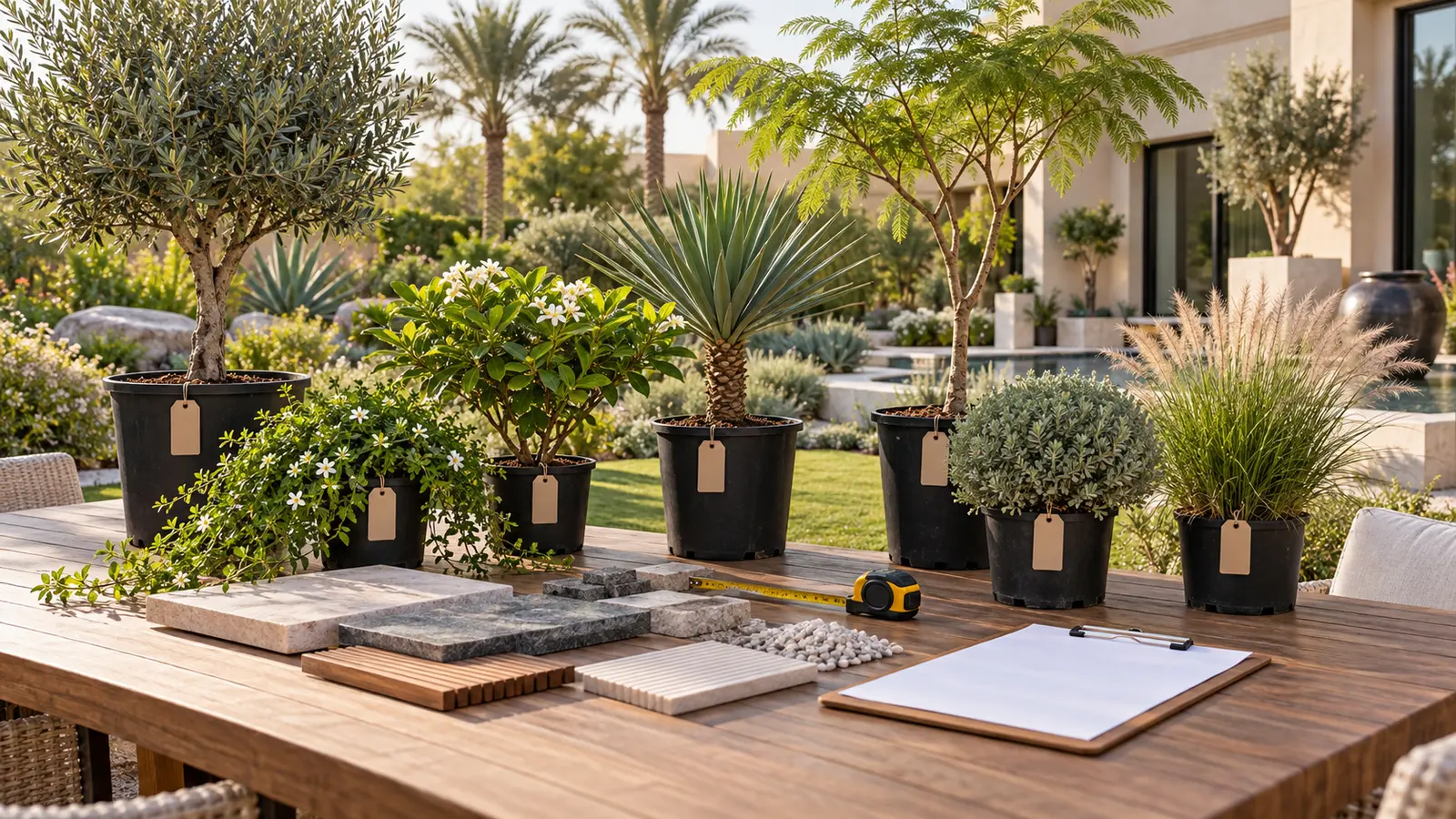
Living material needs measurable supply criteria. Record container or root-ball size, overall height range, canopy spread, clear stem where relevant, minimum branch structure, root condition expectations and acceptable seasonal variation. For hedges and mass planting, define consistency across the batch. Photos should include a scale reference and current date, but the team may still need to inspect tagged specimens at the nursery. Avoid approving a single excellent sample when the remaining quantity differs markedly. A taller plant is not automatically better: an overgrown or root-bound specimen may establish less reliably than a balanced plant of the specified grade.
- Current dimensions
- Form and branching
- Root and foliage condition
- Batch consistency
Check provenance and applicable documentation
Ask the supplier to identify the nursery source and provide documentation relevant to the plant and project. Imported agricultural consignments are subject to federal processes administered by the Ministry of Climate Change and Environment; the owner should not try to recreate those procedures, but the appointed supplier should confirm applicable permits and plant-health documentation. For locally propagated stock, retain traceability and delivery information. Specialist review is important where protected, restricted or unusual species are involved. The substitution register should record what was checked without making unsupported claims that a plant is certified, native or authority-approved merely because it appears on a nursery list.
- Supplier and nursery source
- Applicable plant-health records
- Tagged specimen references
- No unsupported certification claims
Planning example
A villa design specifies twelve upright shrubs to create a filtered screen beside an evening terrace. The nursery proposes a readily available alternative at the same container size. The matrix shows that the alternative grows wider, has a looser base and needs a different irrigation pattern. Rather than accepting it plant for plant, the designer tests a revised spacing, adds a lower companion layer and confirms the adjusted irrigation zone with the specialist. Representative plants are tagged at the nursery, photographed with dimensions and checked again at delivery. The change is recorded as a redesigned planting group, not described as a like-for-like swap.
- Restate the design role
- Compare mature habit
- Revise spacing and irrigation
- Tag and inspect the approved batch
Coordinate substitutions with soil and irrigation
A substitution can alter more than the planting palette. Review soil depth, drainage, amended soil volume, root space, irrigation emitter type and zoning, mulch clearance and proximity to paving or structures. Do not solve a plant-availability problem by selecting a species unsuited to the prepared conditions. Likewise, do not assume irrigation can compensate indefinitely for poor site fit. If the proposed plant has materially different water needs, it may not belong in the same hydrozone. Dubai’s current public-space guidance emphasises efficient water use, sustainable irrigation and adaptive planting; the same decision discipline helps a private garden avoid mismatched zones and unnecessary maintenance.
Set a hold point before dispatch
The procurement programme should include a formal approval hold point before plants leave the nursery. Submit the substitution matrix, tagged-specimen schedule, photographs, dimensions and relevant documentation in one package. Record accepted seasonal tolerances and what happens if the tagged specimen deteriorates or is sold. Confirm the delivery sequence so trees and sensitive plants are not left waiting on a hot, unfinished site. Approval should expire or be rechecked if delivery is delayed significantly because living stock changes. No substitution should be decided by the delivery driver or accepted solely to avoid a return journey when the design team has not reviewed it.
- Complete substitution submission
- Named approval responsibility
- Tagged stock reserved
- Delivery date and site readiness confirmed
Inspect delivery and establishment information
At delivery, compare labels and tagged references with the approved register, then inspect quantity, dimensions, form, visible root condition, pests, disease symptoms, mechanical damage and transport stress. Quarantine or reject questionable stock through the project procedure rather than planting first and debating later. Record substitutions on the final planting schedule and update irrigation and maintenance information. Handover should state establishment watering, monitoring and replacement responsibilities prepared by the relevant professionals. Successful establishment depends on installation, season, aftercare and site conditions as well as nursery quality; approval of a specimen is not a guarantee of survival or a substitute for proper care.
- Identity and quantity checked
- Condition inspection
- Updated planting and irrigation records
- Establishment responsibilities issued
Limitations and responsible claims
Plant suitability cannot be guaranteed from a generic list or photograph. Microclimate, soil, water quality, irrigation, handling, planting season and maintenance all influence performance. Availability also changes quickly. Do not claim a substitution is native, non-toxic, drought-proof, pest-free or authority-approved without reliable evidence appropriate to that statement. Imported plants and regulated species may require specialist and government processes. The project landscape designer, horticultural supplier and irrigation specialist should review the actual site and stock. Where pets, children, allergies or food-growing are material, add those requirements explicitly rather than assuming ornamental nursery practice covers them.
- No generic survival promise
- No unsupported plant claims
- No uncontrolled imported stock
- No substitution without site-fit review
Suitable next step
Before the nursery order is confirmed, ask for a live substitution register covering every unavailable plant. For each proposal, require the design role, full botanical identity, performance comparison, supplied size and form, tagged-stock evidence, documentation status, irrigation impact and named approver. Review high-value trees and the largest planting groups first because they affect layout, budget and programme most. Then lock a delivery inspection checklist and update the planting schedule after acceptance. This creates a transparent chain from design intent to installed garden and makes substitutions useful adjustments rather than invisible compromises discovered months later.
- Issue the substitution matrix
- Review tagged specimens
- Coordinate irrigation and spacing
- Update final records after delivery
Sources & further reading
Make this useful for your project.
A review of your property and priorities can turn general guidance into a defined brief.
Explore Planting and softscapeDiscuss your project