Direct answer
Before the nursery order is placed, the planting schedule should settle what each plant is, its role in the design, specified supply size or form, quantity, location, spacing logic, site suitability, water grouping and acceptable substitution process. It should also agree with the plan, soil-preparation scope, irrigation layout and establishment responsibilities. A schedule that only lists common names and quantities invites inconsistent pricing and last-minute substitutions that may change the garden's character and long-term care needs.
Treat the schedule as a coordinated specification
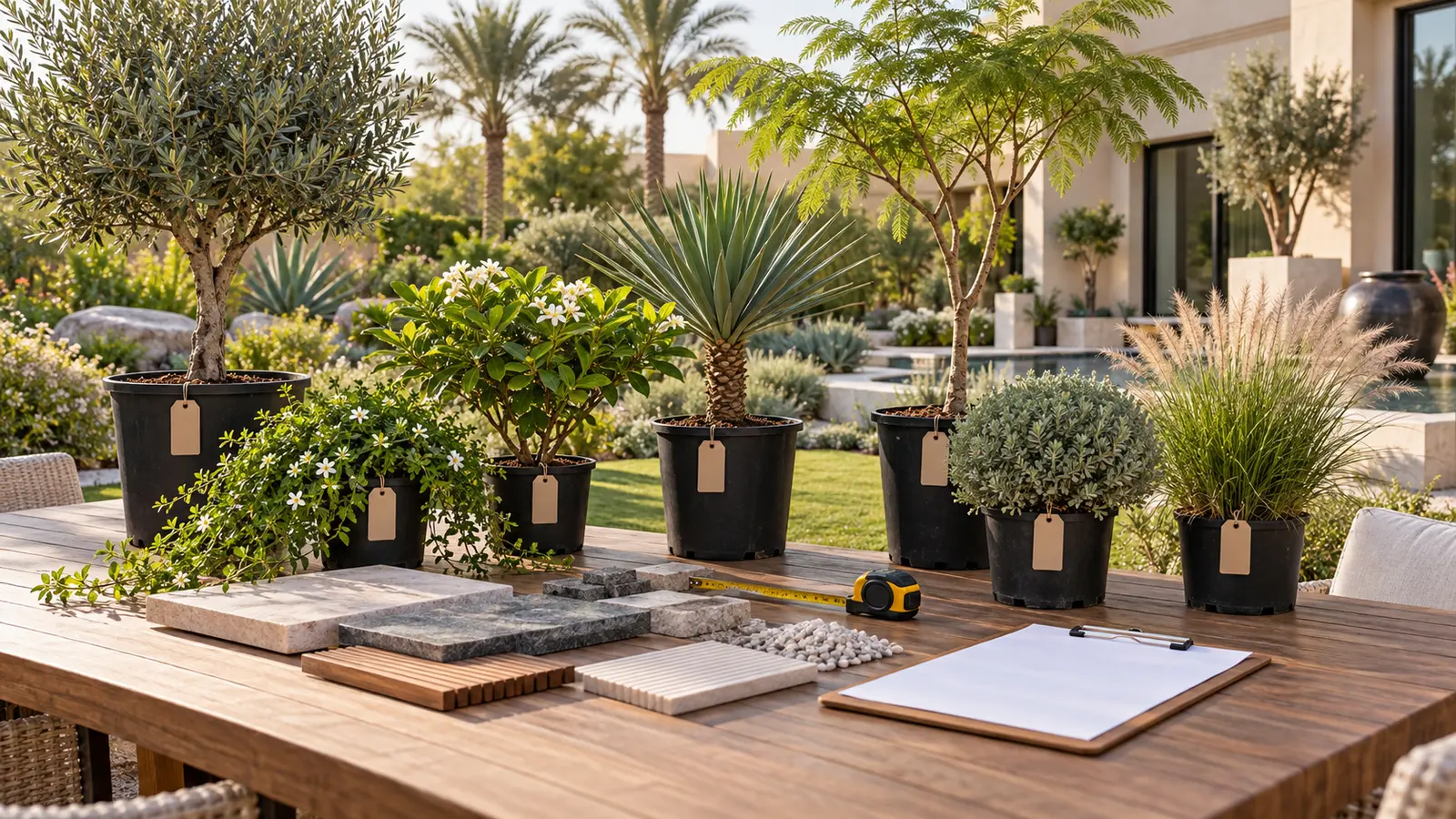
Every schedule entry should correspond to a clear symbol or area on the planting plan. Use an unambiguous botanical identity and, where helpful, a plain-language name, then add the characteristics needed to compare like with like. Those characteristics may include height range, canopy or spread, container or root condition, form, branching expectation and presentation. The exact fields depend on the landscape specification and procurement method. The goal is not paperwork for its own sake; it is to ensure the designer, nursery, installer and owner are discussing the same living material.
- Unique schedule code and coordinated plan symbol
- Botanical identity and useful common name
- Specified supply size, form and condition
- Quantity and location reference
- Notes that affect acceptance or substitution
Check the mature role, not only delivery size
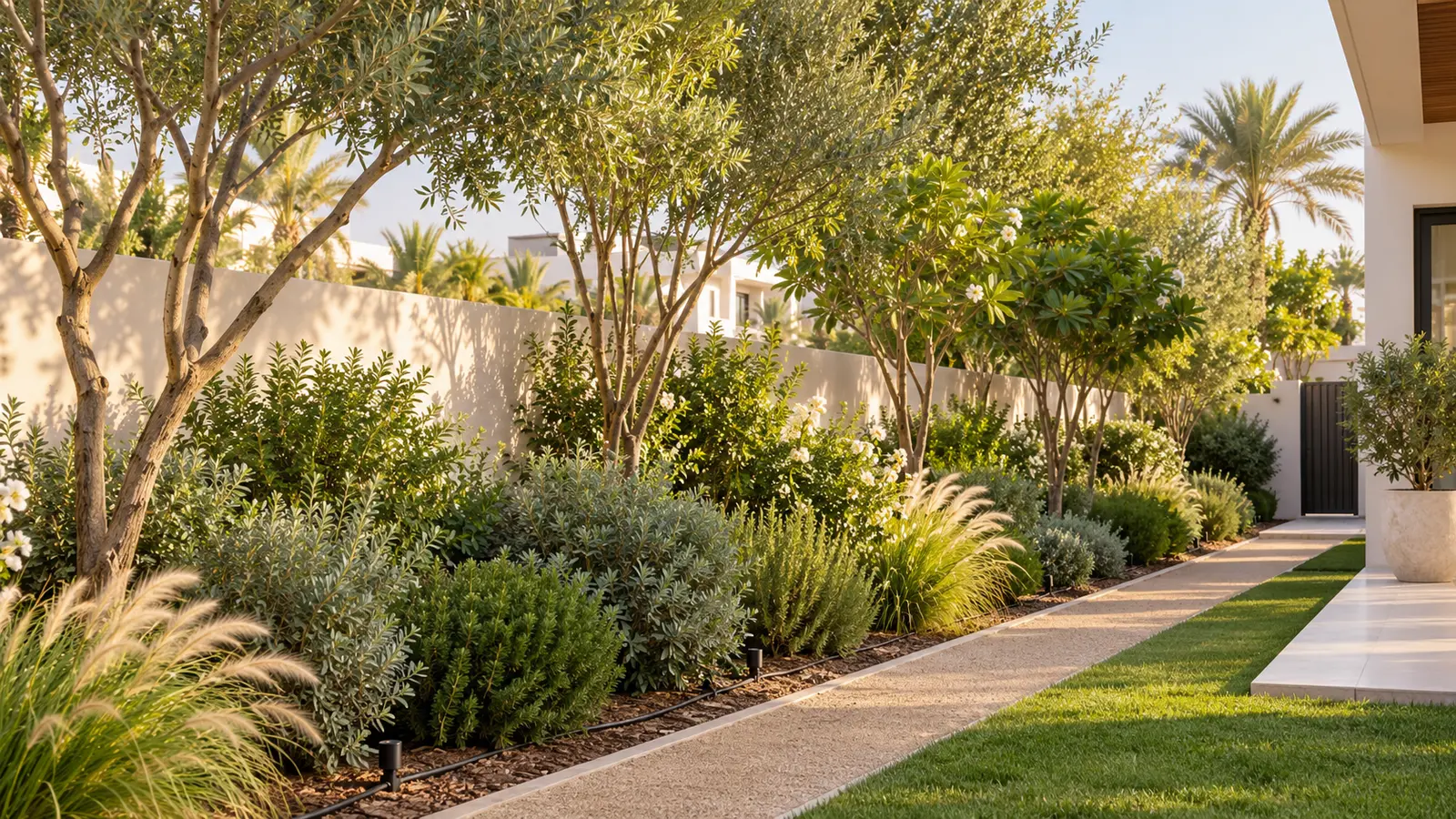
A plant's appearance on delivery is only one moment. Review its expected mature height and spread, relationship to paths and walls, shade pattern, root context and access for pruning or replacement. A small specimen may be appropriate when establishment and growth are acceptable; a larger specimen may create immediate structure but brings different handling, support, irrigation and aftercare questions. The schedule should not promise an instant mature scene where the chosen supply size cannot provide it. Use the design intent and maintenance capacity to decide what needs early impact and what can grow into place.
Match the list to actual site conditions
Cross-check every group against mapped sun and shade, soil preparation, drainage, wind exposure, reflected heat and available rooting volume. Dubai Municipality's Greenery and Plantation Manual 2026 is an official reference for landscape professionals working on parks, public spaces and greenery, with an emphasis on climate-responsive planning, irrigation and long-term maintenance. A private garden still needs a site-specific brief: the project team should confirm which guidance and authority requirements apply rather than treating a general palette as universal. Plants that share a visual style may have very different site tolerances.
Coordinate irrigation and establishment before ordering
Group the schedule in a way that helps the irrigation designer understand differing water needs and locations. DEWA advises timing irrigation to reduce evaporation and checking systems for leaks, coverage and seasonal adjustment; those operating principles reinforce why controls and planting cannot be planned separately. The appointed specialists should determine the actual system, settings and water requirements. The order should also identify who is responsible for delivery inspection, planting, initial care, replacements and handover, because living material can decline when those boundaries remain vague.
Planning example
Imagine a fictional villa garden with a shaded arrival court, sunny pool edge and western boundary exposed to late-afternoon heat. An early schedule lists 64 shrubs under three common names. Review splits them into distinct groups by location and design role, adds botanical identities and supply forms, and adjusts quantities after mature spreads are drawn on the plan. The pool-edge selection is changed to a cleaner, more suitable group after irrigation, litter and maintenance are discussed. The arrival court keeps a fuller supply size for immediate structure, while the boundary uses smaller repeated plants that can establish into a continuous layer. The order is now comparable and traceable.
The pre-order review checklist
Complete the review with the latest plan, schedule, soil information and irrigation layout open together. Record any approved substitution rather than allowing it to exist only in an email or site conversation.
- Codes, names and quantities match the current plan
- Supply size and form are clear enough for comparable pricing
- Mature spread and maintenance access have been considered
- Sun, shade, soil, drainage and heat exposure are checked
- Plant groups agree with the irrigation-zone intent
- Soil preparation and planting-bed readiness are confirmed
- Substitution criteria and approval responsibility are written
- Delivery, inspection and rejection process is assigned
- Establishment care, replacement and handover responsibilities are defined
- Any current community or authority requirements are confirmed
Limitations and procurement realities
Nursery availability and plant condition can change, so a schedule is not a guarantee that every item will be acceptable on the delivery date. Equivalent botanical identity does not automatically mean equivalent form, maturity, site performance or maintenance. Inspection should follow the project specification, and substitutions should be reviewed by the landscape designer against the full composition. This article does not prescribe species, irrigation settings, soil amendments or planting methods for a particular garden; those require site information and competent professional input.
A useful next step
Ask for a coordinated pre-order issue containing the planting plan, schedule, representative nursery photographs where appropriate, substitution register, soil-preparation status and irrigation-zone overlay. Review the package in one meeting and mark unresolved items with an owner and deadline before authorising procurement. Verdelle Landscapes can then align the planting selection with the garden's actual light, soil, water and maintenance brief rather than letting availability decisions redraw the scheme at the last moment.
Sources & further reading
Make this useful for your project.
A review of your property and priorities can turn general guidance into a defined brief.
Explore Planting and softscapeDiscuss your project