The direct answer
Fix tree positions only after checking the selected species at mature size, the available soil volume, shade objective, root and canopy interfaces, irrigation, drainage, underground services, lighting and maintenance access. Draw both trunk and mature canopy, then verify the centre point on site. A tree can anchor a garden for years, but a position chosen from its nursery size may later conflict with walls, paving, pergolas or views.
Start with the purpose
State what each tree is meant to achieve: afternoon shade, privacy, framing a view, marking an entrance, adding seasonal interest or creating habitat. The objective helps test whether the position is worthwhile. A shade tree should relate to where people actually sit and to the sun path. A screening tree needs enough depth to grow naturally. Avoid using trees to solve every boundary issue; sometimes layered shrubs or a built screen provides a better fit.
Design for mature dimensions
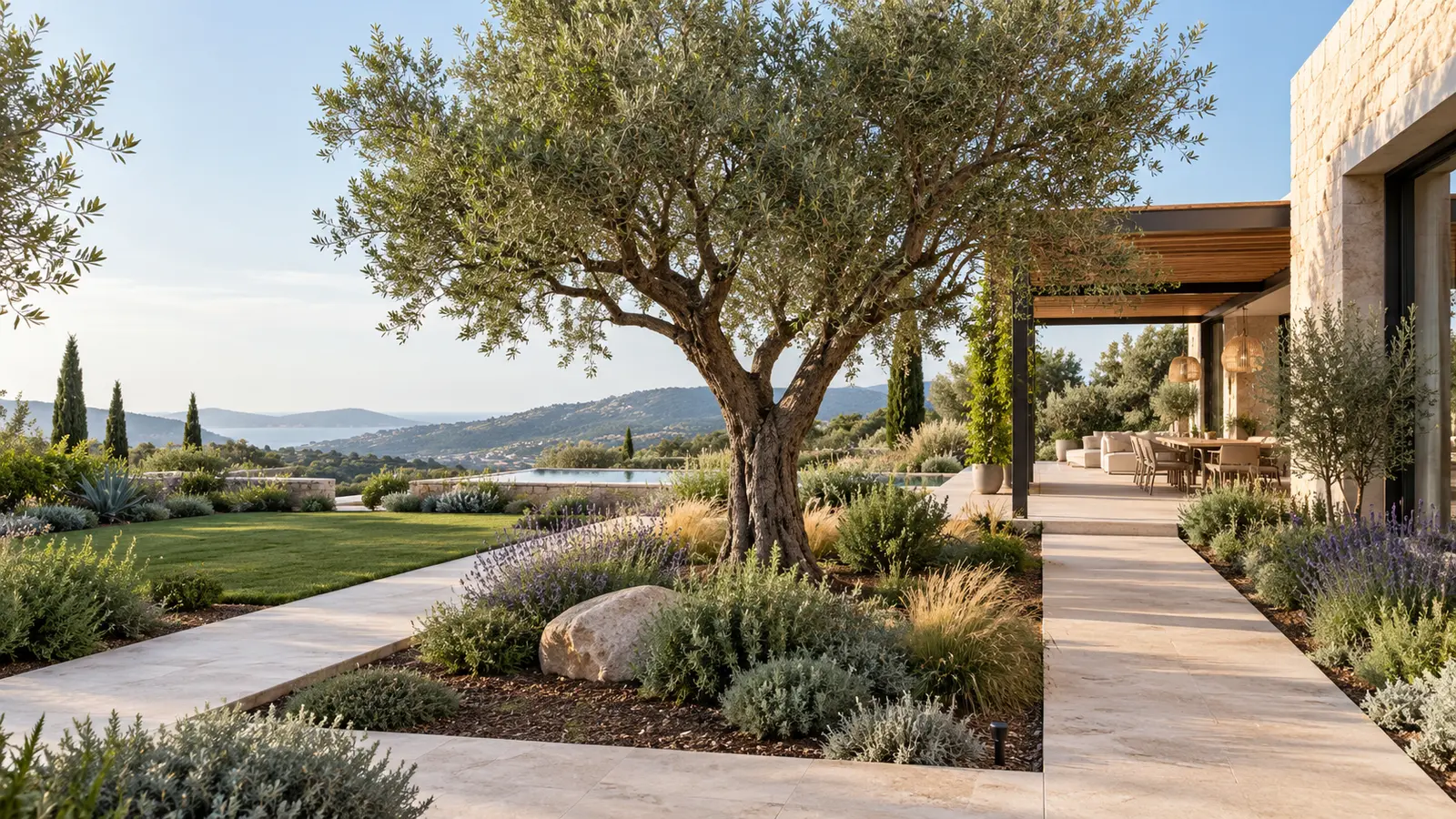
Use dependable information for mature height, canopy spread, form, root behaviour and maintenance needs under comparable conditions. Draw the future canopy against the villa, pergola, pool and neighbouring spaces. Check clearance from roofs, facade openings and paths, while allowing pruning and access. Species choice should respond to the site's microclimate and available care. Dubai Municipality's 2026 Greenery and Plantation Manual emphasises climate-responsive design, sustainable irrigation and native or adaptive planting across different landscape contexts.
Protect soil and root space
A decorative opening in paving may not provide enough usable soil. Coordinate the planting pit or connected soil area, drainage, soil specification, finished levels and protection from compaction. Review how roots and future trunk growth meet kerbs, walls, utilities and paving. Technical solutions vary by species and site, so the landscape designer and relevant specialists should define the root-zone strategy rather than relying on a generic detail.
Coordinate irrigation, lighting and services
Show the tree on the irrigation plan with establishment and mature watering considered. Keep valves, cable joints and fixtures accessible, and avoid placing uplights where trunk growth or maintenance will make them impractical. Check underground electrical, drainage, water and pool-service routes before excavation. Irrigation zoning should follow planting needs, not simply the nearest pipe. The planting, hardscape and services teams should approve one coordinated set-out drawing.
Compare candidate positions
For an important tree, test at least two positions against the same criteria: useful shade, view framing, soil area, services, maintenance and mature relationships. A position that looks balanced on plan may shade the wrong zone or compete with a facade opening. A slightly less symmetrical location may provide better soil and longer-term growth. Draw canopy circles and seasonal sun direction, then record why the selected position is preferred.
Planning example
Planning example: a tree is placed beside a terrace to shade late-afternoon seating. The first layout centres it in a narrow paving cut-out, directly over an irrigation main and close to a pergola column. A mature-canopy review moves the tree into a larger connected planting bed, shifts the main, keeps a maintenance route and aligns the shade with the lounge rather than the empty path. A lower light is moved outside the likely trunk-growth zone. This invented example shows the value of coordination; the real set-out depends on species, site survey and specialist advice.
The tree-position checklist
Review each tree as a numbered item on the landscape plan.
- Purpose and selected species recorded
- Mature canopy and height shown
- Soil volume and root-zone strategy coordinated
- Finished levels and drainage checked
- Distance from buildings, walls, pool and paving reviewed
- Underground services survey considered
- Irrigation coverage and zoning agreed
- Lighting and cable positions kept serviceable
- Maintenance, pruning and replacement access retained
- Views and neighbouring interfaces reviewed
- Nursery availability and approved specimen size confirmed
- Final centre point checked on site before excavation
Limitations and a useful next step
Tree growth varies with species, soil, water, climate, nursery stock and care. Published mature dimensions are planning guides, not exact predictions. Excavation near structures or known services may require additional specialist review, and planting must follow applicable community or authority requirements. Next, prepare a tree set-out plan that overlays mature canopies, soil zones, irrigation and all underground services. Walk it on site with hardscape and irrigation teams before excavation, then record any approved adjustments on the coordinated drawing.
Sources & further reading
Make this useful for your project.
A review of your property and priorities can turn general guidance into a defined brief.
Explore Landscape designDiscuss your project