Direct answer
A pet-aware garden brief should record the animals that use the space, their size, age, health advice and behaviour; map their likely routes and rest areas; verify plants and garden products; and coordinate shade, water, surfaces, drainage, boundaries and maintenance. The goal is not to add a token lawn or choose plants from a generic list. It is to understand how the garden will actually be used and remove avoidable conflicts before hardscape, irrigation and nursery orders make the layout expensive to change.
Build the brief around the animal
Start with a simple profile for each pet: species, size, age, mobility, digging or chewing behaviour, preferred toilet area, response to visitors and whether the animal patrols boundaries. Ask the owner to describe a normal morning and evening rather than an idealised routine. Veterinary guidance belongs in the brief when health, allergies, heat tolerance or material exposure is relevant. The landscape designer can coordinate space, but should not replace a veterinarian or trainer. Update the profile if a new animal is expected because a garden suitable for one calm adult dog may not suit a puppy or another species.
- Record usual routes and high-energy periods
- Note digging, chewing and boundary behaviour
- Identify supervision and maintenance routines
- Bring veterinary advice into relevant design decisions
Map routes, shade and water together
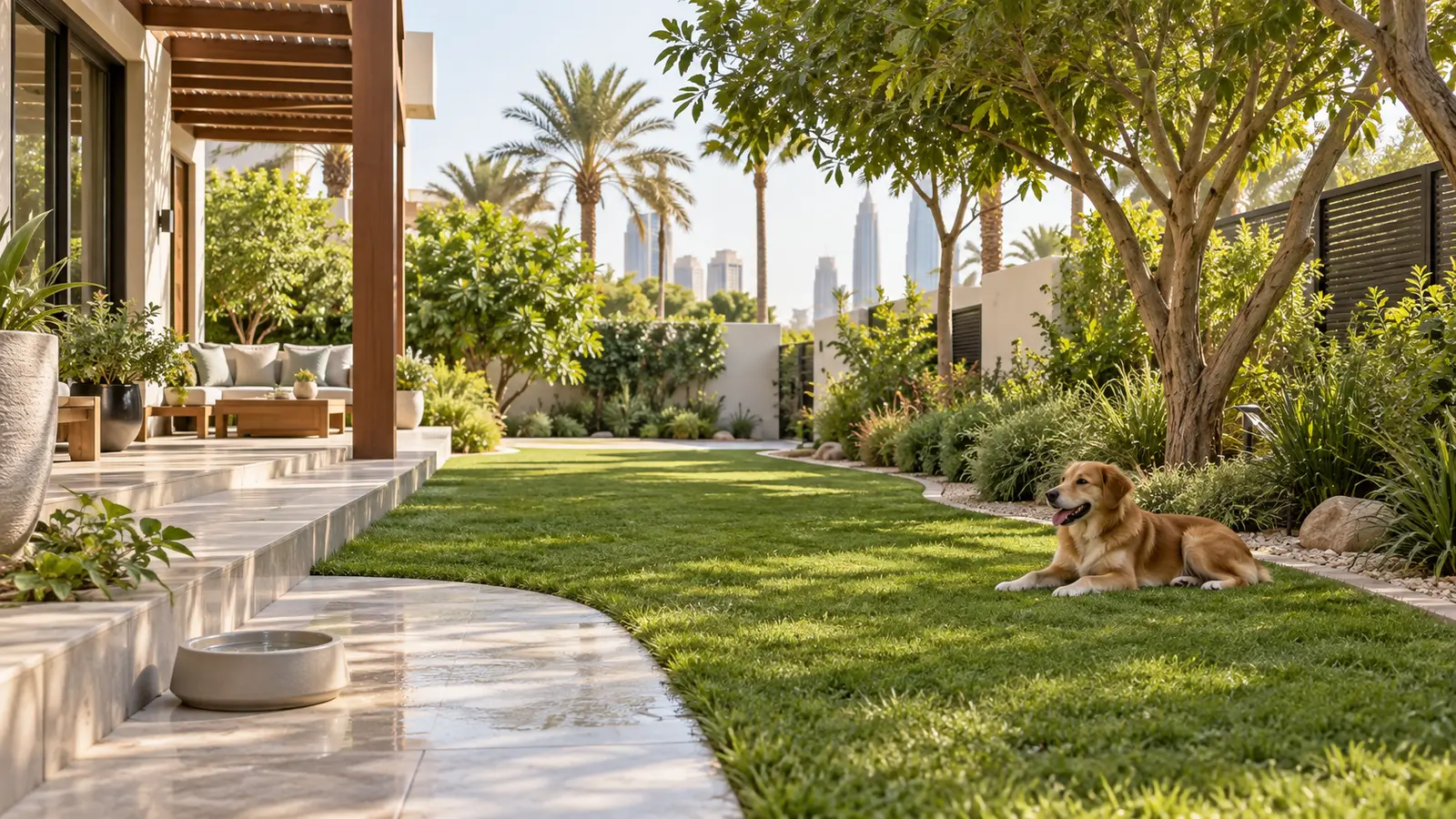
Trace the paths between doors, gates, lawn, toilet area, water and shaded rest points. Repeated movement will create a route whether the plan acknowledges it or not, especially along boundaries and at corners. Give that route sufficient width and a surface strategy that can tolerate the use. Check shade at the times the pet is outside; a tree canopy shown on a plan may not protect the route at midday or while a young tree establishes. Locate water where it can be refreshed, cleaned and kept out of intense sun without obstructing circulation.
Verify every plant and substitution
Use botanical names, not only common names, because common names can cover different plants. Screen the schedule against reputable toxic and non-toxic plant information, then ask the owner to confirm pet-specific questions with a veterinarian. The ASPCA database is a useful reference, but it is not a substitute for individual advice or a local specification. Treat nursery substitutions as a new review, not an automatic equivalent. Also consider thorns, sharp seed heads, sap, fruit drop and whether a curious animal can reach irrigation additives or mulch. A non-toxic label does not mean every part, quantity or use is suitable.
Choose surfaces through heat, wear and cleaning
Compare paving, gravel, lawn, groundcover and synthetic surfaces by shade, surface temperature, grip, drainage, wear, cleaning and how edges behave under digging or running. A light-coloured paving sample may still become uncomfortable in exposed sun; test representative materials in the intended location and seek appropriate animal-care advice. Avoid loose material at door tracks or pool edges if it will migrate constantly. Provide falls and drainage without creating persistent damp zones. Toilet areas need a realistic cleaning route and should not discharge into planting or irrigation without an intentionally reviewed solution.
- Test exposed samples under real sun
- Reinforce gates, turns and repeated paths
- Coordinate falls, drains and irrigation
- Keep cleaning access simple and visible
Coordinate boundaries, gates and garden products
Review gaps beneath and beside gates, changes in level, climbable elements near boundaries and planting that could conceal damage. The suitable arrangement depends on the animal and existing property, so critical containment needs specialist judgement and regular inspection. Give maintenance teams secure access without leaving routine gate conflicts. Store fertilisers, pesticides, fuels and tools away from pet routes in controlled locations, and agree how treated areas are communicated. Irrigation boxes, cables and emitters should be positioned to limit damage and allow inspection rather than buried within a favourite digging zone.
Planning example
A villa garden is planned for an adult dog that moves between a kitchen door, shaded lawn and side gate, and tends to patrol the boundary. The first layout places delicate planting across that route. The revised brief keeps a clear shaded loop, strengthens the turn at the gate, moves the water point to an accessible shaded position and uses layered planting behind a durable edge. Each scheduled plant is recorded by botanical name and reviewed; any nursery substitution must return for the same check. A cleaning route and contained storage point are added, while boundary details are assessed separately rather than described as escape-proof. This is a planning example, not a completed project, veterinary recommendation or safety guarantee.
Checklist before planting and hardscape orders
Keep the pet profile and zone plan beside the planting and material schedules so later substitutions do not lose the original reasoning.
- Pet profile and normal daily routine are recorded
- Routes, rest points, shade and water are mapped
- Plant schedule uses botanical names
- Toxicity and physical hazards are reviewed with appropriate advice
- Surface samples are checked for heat, grip, wear and cleaning
- Drainage and irrigation do not create persistent wet areas
- Boundaries, gates and level changes have been assessed
- Garden products and tools have controlled storage
- Maintenance access and substitution approval are defined
Limitations and the useful next step
Landscape planning cannot certify a plant, surface or boundary as universally safe for every animal. Behaviour, health, supervision, construction quality and maintenance all affect the outcome. Dubai Municipality's Greenery and Plantation Manual 2026 provides current local guidance on sustainable landscaping and plant selection, while the project still needs site-specific design and any applicable approvals. The useful next step is a garden walk with the pet's normal route visible: mark high-wear paths, hot and shaded areas, gates, water, drainage and every existing plant of concern. Convert those observations into a coordinated zone plan before the material and nursery schedules are released.
Sources & further reading
Make this useful for your project.
A review of your property and priorities can turn general guidance into a defined brief.
Explore Landscape designDiscuss your project