Direct answer: audit the field system before choosing the controller
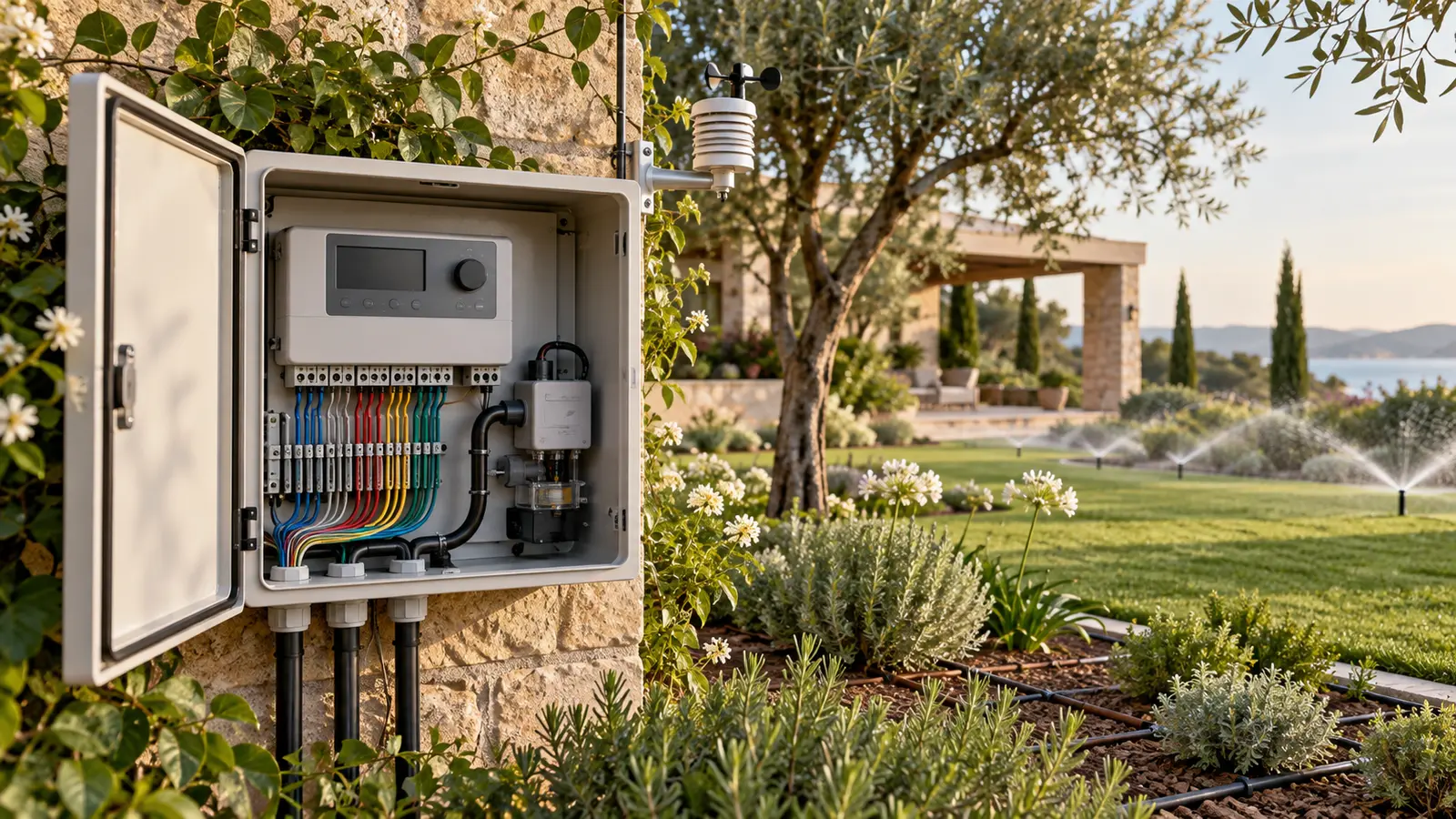
An irrigation controller and sensor brief should settle the verified station count, zone map, valve and wiring condition, power and enclosure, existing sensor inputs, water-source interfaces, user roles, connectivity, reporting needs, future capacity and commissioning tests before replacement equipment is ordered. The controller is not the irrigation system by itself. If an existing fault, mixed planting zone or inaccessible valve is left undocumented, a more capable control panel may simply automate the same problem. Start with what is actually connected, then specify the functions the garden and maintenance team can use reliably.
Record the existing system and its symptoms
Build a zone schedule showing the area served, planting type, irrigation method, approximate operating pattern and any known issue for each station. Confirm which terminals are active, spare or unidentified and have the appointed specialist test the relevant wiring, valves and field devices. Note manual overrides, intermittent faults, leaks, pressure concerns and zones that water unlike plants together. Photograph the existing enclosure and labels before anything is disconnected. This baseline distinguishes a controller problem from a field-system problem and supports a realistic scope for repair, retention or replacement.
Choose capacity around the zone plan
Specify the required station capacity from the verified schedule, allowing only justified future provision rather than guessing. Record how master valves, pump controls or other interfaces are handled by the proposed system and who confirms compatibility. Decide whether the controller must support seasonal adjustment, multiple programs, flow monitoring, alarms, remote access or local-only operation. Current manufacturer information matters because features, accessory support and software services change. Rain Bird's official controller support pages, for example, publish manuals and compatibility information for specific models. The specialist should use the selected product's current documentation, not assumptions carried over from another controller family.
Brief sensors as compatible inputs, not generic add-ons
A sensor is useful only when its purpose, location, compatibility and response are defined. The brief may compare rain or weather inputs, soil-moisture sensing and flow monitoring, but the selected combination should follow the site and controller. Hunter's official water-saving sensor guide explicitly treats sensor-to-controller compatibility as a selection issue, while Rain Bird documents weather-based control and sensor behaviour for its systems. Record what each sensor is expected to influence, how an operator sees its status, what happens if it fails or goes offline, and who is permitted to bypass it. Avoid promising savings percentages without a verified product, baseline and operating context.
Decide connectivity, ownership and fallback
For connected controls, agree whose account owns the site, which staff receive alerts, who may edit programs and how access transfers when a maintenance contractor changes. Confirm the available network at the controller location and whether core irrigation can continue safely if internet service is unavailable. Record subscription, app or cloud dependencies disclosed by the chosen manufacturer. Define who receives a fault alert and how quickly it should be reviewed. A local manual method and clear isolation procedure remain important operational requirements, but electrical and control work must be handled by competent specialists. Handover should never leave the homeowner dependent on a personal account belonging to an installer who is no longer appointed.
Coordinate the controller with planting and water use
Programs should be derived from the planting and irrigation-zone strategy, then adjusted through observation and responsible maintenance. Trees, lawns, pots and mixed borders may not share the same root depth, exposure or application method. A controller cannot correct poor zoning by software alone. Link the new controls to the planting schedule, water source and establishment plan, and identify who will review performance after seasonal or planting changes. The guide explaining why planting and irrigation plans belong together provides the wider design context for this control decision.
Planning example
Planning example: a fictional villa garden has an eight-station controller, but the labels are incomplete and two garden areas have changed since installation. The audit finds six active zones, one disconnected valve and one terminal that operates two unlike planting areas together. Instead of ordering another eight-station unit immediately, the landscape and irrigation teams first update the zone plan, identify the faulty field connection and decide whether the mixed zone should be corrected. They then brief a controller with verified capacity, a compatible weather input, shared owner and maintenance access, and a documented offline fallback. Commissioning includes a witnessed station test, sensor-status check and updated labels. The example does not prescribe wiring or programming; those tasks remain with the appointed specialist.
Replacement and commissioning checklist
Use the checklist before ordering and repeat the relevant points at handover so the installed controls match the approved operational brief.
- Active, spare and unidentified stations are verified against a marked zone plan.
- Valve, wiring, water-source and field-system faults are recorded separately.
- Required capacity, programs, future provision and specialist interfaces are agreed.
- Controller, sensor and accessory compatibility is confirmed from current product information.
- Network availability, account ownership, user permissions and offline behaviour are defined.
- Enclosure, power and service access are reviewed by the relevant specialists.
- Commissioning includes station, sensor, alarm, override and user-access checks.
- Labels, zone schedule, manuals, account transfer and maintenance actions are handed over.
Limitations and the next useful step
This brief does not diagnose electrical faults, size irrigation hydraulics, select field devices or replace manufacturer and authority requirements. Product features and online services can also change, so the final selection must use current data for the exact model and region. The next useful step is a witnessed irrigation audit: operate every zone, mark the plan, record faults and confirm who will own and maintain the controls. Ask the appointed irrigation specialist to return a product schedule and compatibility matrix against that evidence. Approve the replacement only when the controller, sensors, garden zones and handover responsibilities form one coherent system.
Sources & further reading
Make this useful for your project.
A review of your property and priorities can turn general guidance into a defined brief.
Explore Irrigation systemsDiscuss your project