The direct answer
Choose artificial grass when a defined usable surface, consistent appearance and no irrigation to that patch are priorities—and when the household accepts product-specific cleaning, replacement and surface-comfort trade-offs. Choose living groundcover when seasonal change, habitat, planted character and integration with the garden matter—and when irrigation and horticultural care are realistic. Many gardens benefit from a mixed surface plan rather than one material everywhere.
Name the activity first
Mark where children play, furniture moves, pets use the garden, people walk repeatedly and areas are viewed more than occupied. A hard-wearing usable patch has a different brief from a shaded planted strip or a decorative foreground. Do not select from a small sample before deciding the activity. The material must also connect logically to doors, paths, drains, irrigation zones and maintenance access.
Compare the whole build-up
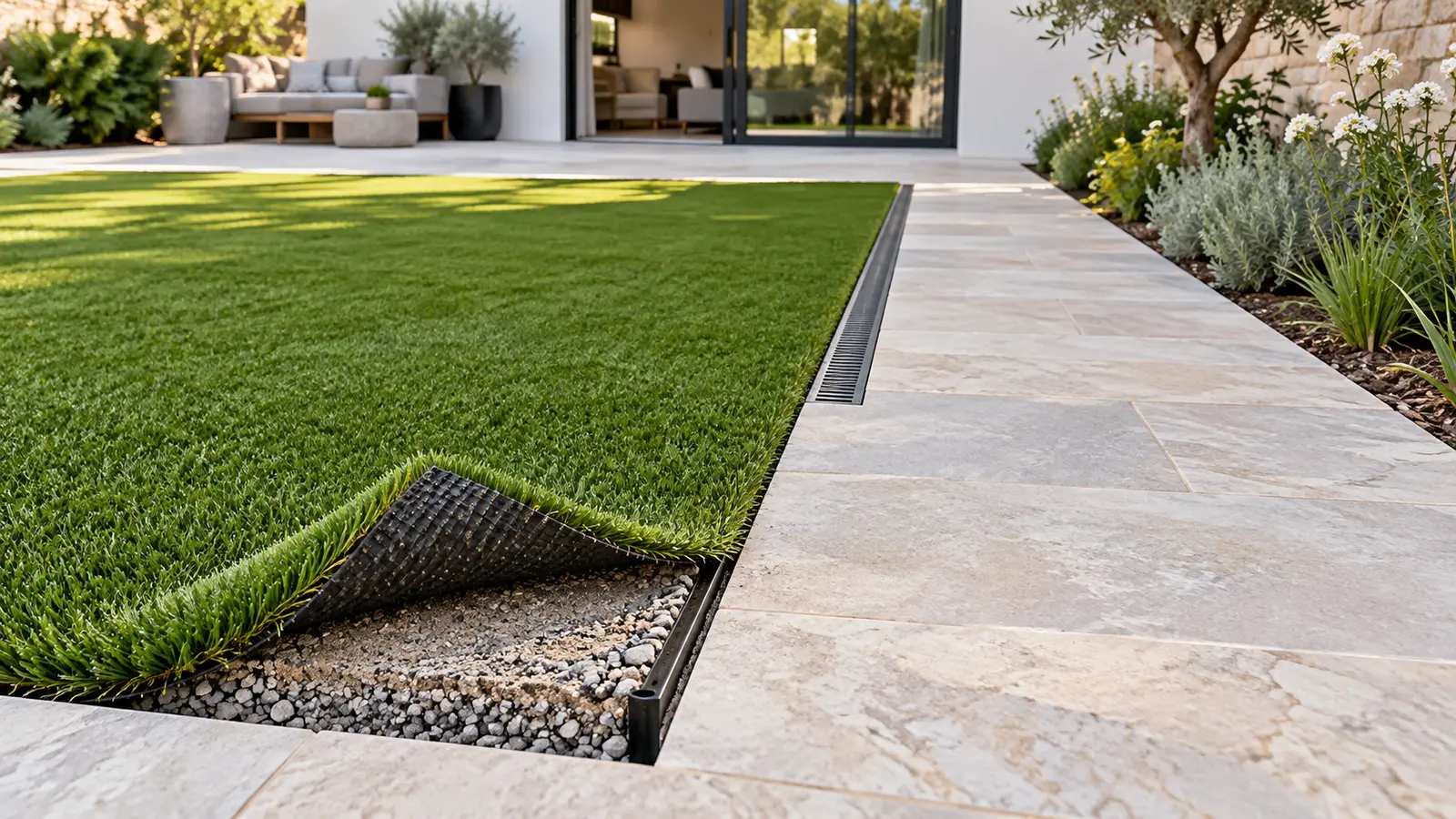
Artificial turf performance depends on the selected product, prepared base, edges, joints, drainage and installation quality; the visible fibre is only one part. Living groundcover depends on suitable soil, species, spacing, irrigation, establishment and ongoing horticultural care. Ask each proposal to state its complete build-up, exclusions and replacement method. Construction, drainage and irrigation design should be handled by the relevant professionals rather than copied from generic advice.
Test exposure and comfort in place
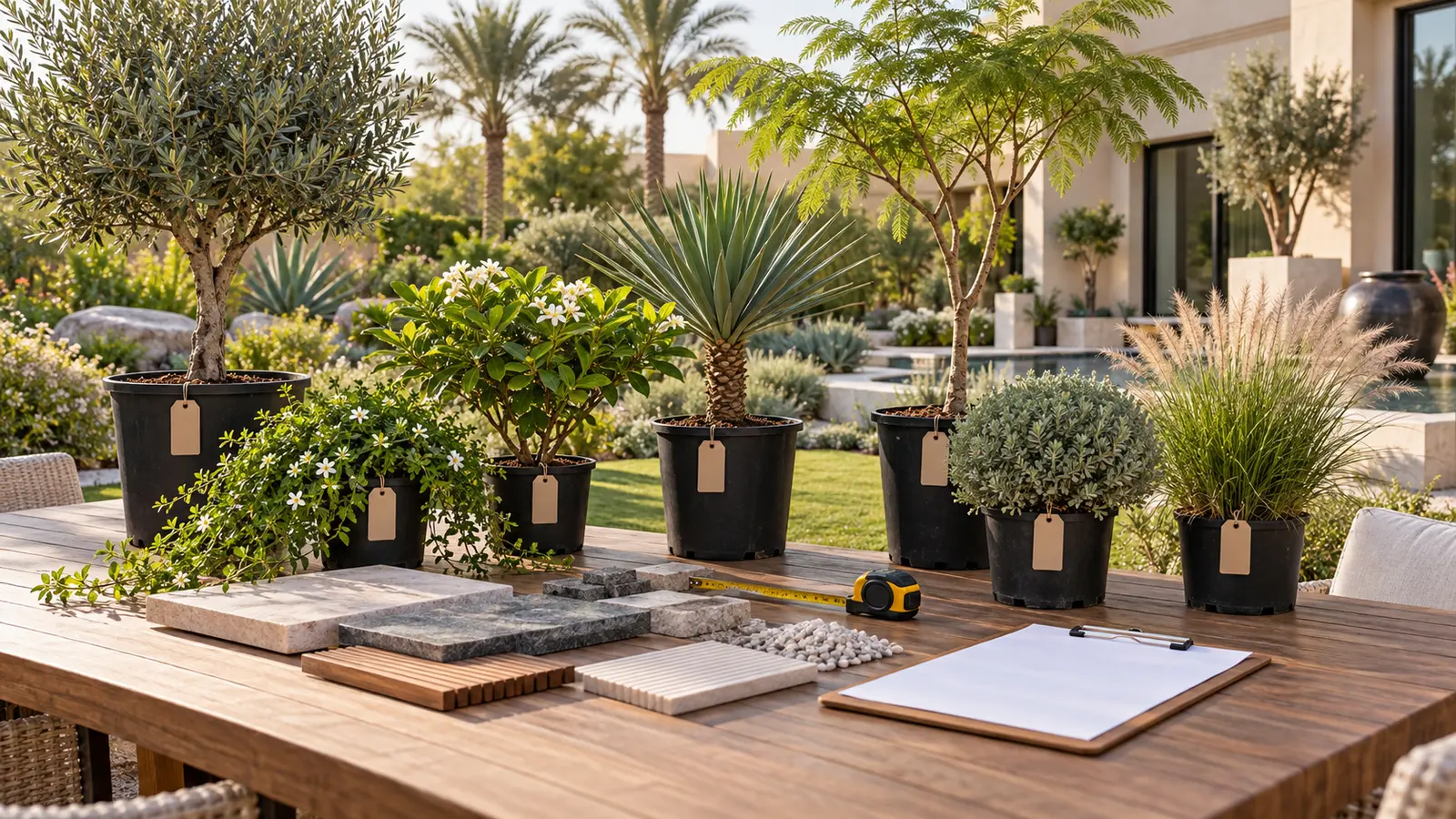
Sun, shade, reflected heat, wind and irrigation overspray vary across a garden. Review product samples and candidate plants in the actual exposure where possible. For artificial turf, request current manufacturer information on intended use, warranty conditions, care and surface behaviour, and do not assume every product performs alike. For planting, choose species for the site conditions and expected traffic. Provide a nearby alternative surface if any area may be uncomfortable at certain times.
Count maintenance honestly
Artificial turf removes mowing and irrigation from its patch, but leaves, dust, spills, pet use, fibre movement, edges and drainage still require attention. Living groundcover needs establishment, irrigation checks, pruning or thinning, weed management and replacement where conditions are unsuitable. Compare who will perform each task and how often the garden can realistically be attended. “Low maintenance” should mean a named care plan with fewer or simpler tasks, not no care.
Planning example
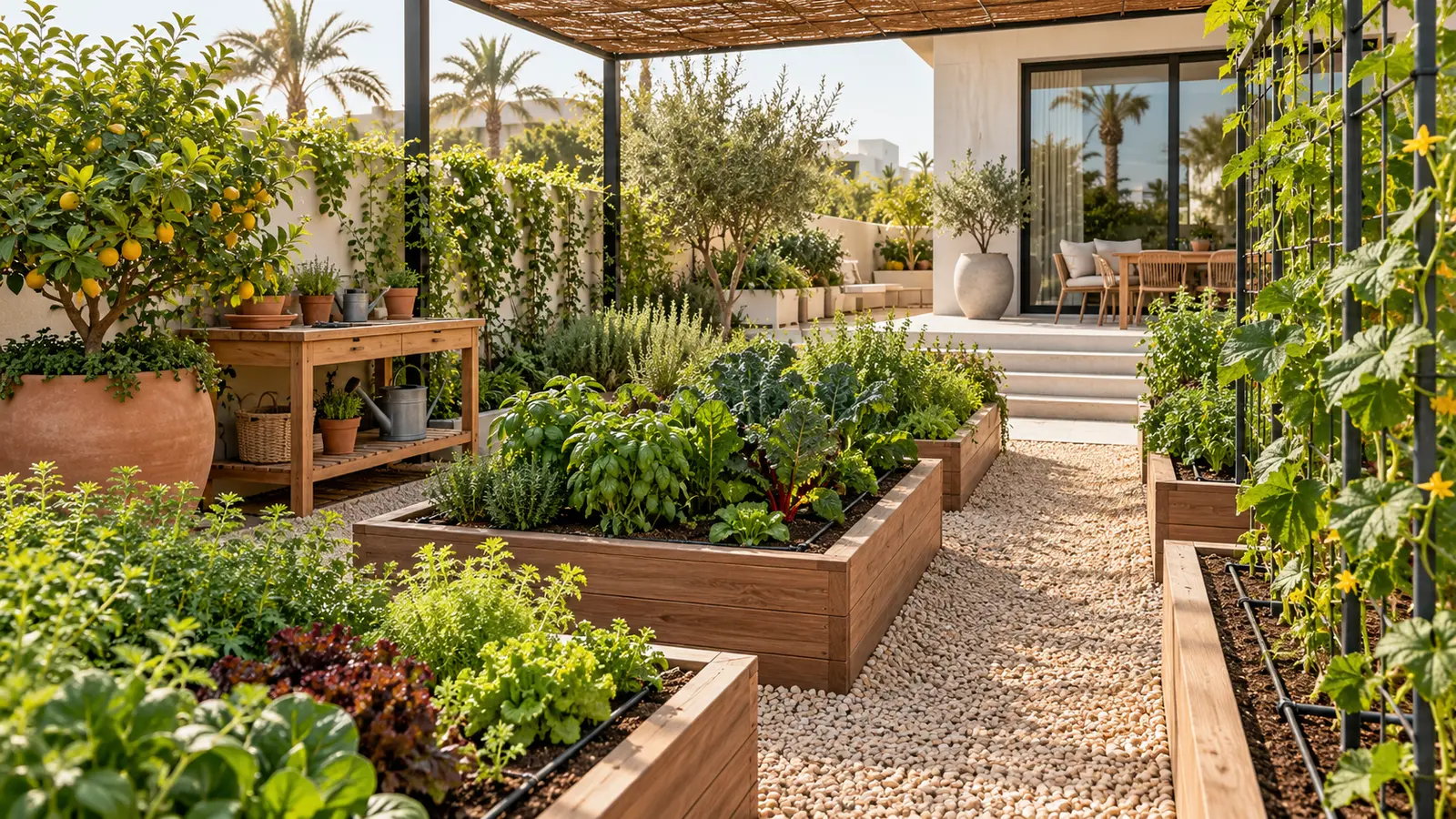
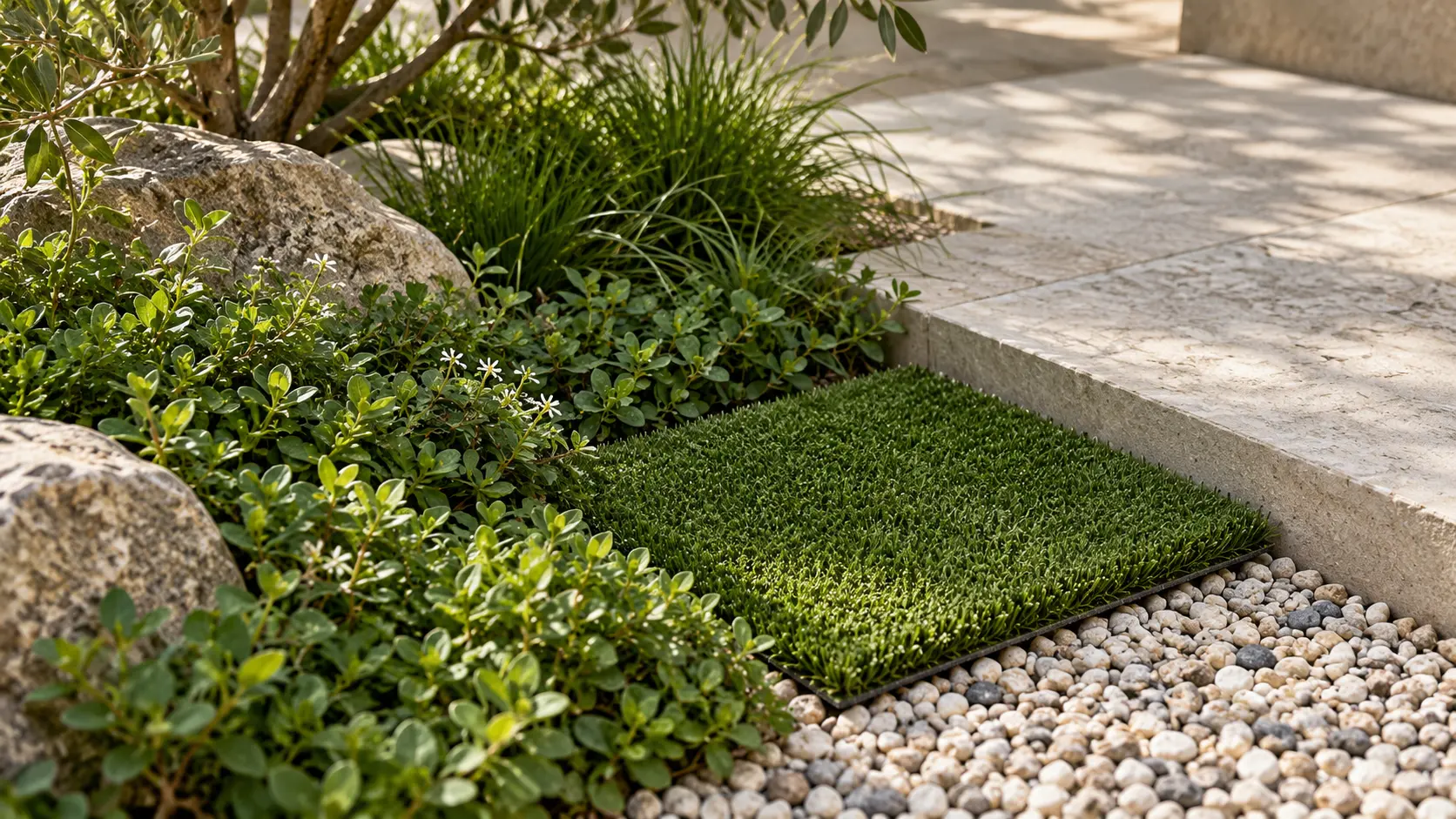
A courtyard brief initially specifies artificial turf across the entire central area. The use map shows a table and chairs near the doors, a narrow play zone, and shaded edges mainly seen from inside. The mixed option uses paving below movable furniture, a defined turf patch for play and living groundcover at low-traffic shaded edges with its own irrigation response. Drainage and cleaning routes are coordinated across all three. This invented example shows allocation by use, not a universal material recipe.
Design the edges, not only the fields
Most failures of appearance occur where surfaces meet. Define the junction between artificial turf and paving, planted soil, drains, tree pits and door thresholds. For living groundcover, allow for growth habit and a maintainable boundary rather than assuming the sample will remain inside a perfect outline. Edges must support cleaning, prevent loose material migration and avoid awkward narrow strips. Review the detail in section so the surface levels and water movement are understood. The designer and relevant specialists should resolve the actual build-up for the site.
Compare replacement and adaptation
Gardens change as children grow, shade increases and household routines evolve. Ask how each area could be repaired, replanted or converted without disturbing the whole courtyard. Artificial turf has a product life and replacement implications that should be discussed with current supplier information; planting can also fail or require renewal if conditions or care are unsuitable. A mixed plan can localise change, provided the boundaries are deliberate. Record spare material, plant references and the date of installation so future decisions start with evidence rather than guesswork.
Use local landscape priorities as prompts
Dubai Municipality’s Greenery and Plantation Manual 2026 addresses public green and open spaces, so it should not be presented as a private-garden rule. Its emphasis on climate-responsive design, water-efficient landscaping, surface-water management, maintenance and native or adaptive planting is nevertheless a useful set of questions for a residential brief. Apply any actual requirement according to the property and responsible authority, with professional review.
Surface decision checklist
Compare options on one plan and over an expected care cycle.
- Every area has a named use and expected traffic level.
- Sun, shade, reflected conditions and irrigation overspray are mapped.
- Complete base, soil, edge and drainage build-ups are defined.
- Product care data or planting maintenance tasks are recorded.
- Pet, play and furniture requirements are discussed explicitly.
- Cleaning, replacement and horticultural access are possible.
- Transitions to paving, planting and doors are detailed.
- Samples are reviewed in the intended location before final selection.
Limits and next step
A sample cannot predict the exact appearance after weather, use and maintenance, and planted performance depends on establishment and real site conditions. This comparison also does not replace drainage, irrigation or horticultural design. The next step is a surface-use plan with small on-site samples, complete build-up notes and a first-year care schedule. Review it against the household routine before deciding how much of the garden, if any, should use artificial turf.
Sources & further reading
Make this useful for your project.
A review of your property and priorities can turn general guidance into a defined brief.
Explore Artificial grassDiscuss your project