The direct answer
Brief a lower-maintenance Dubai garden by defining how much care is genuinely available, then design the planting, soil, irrigation, shade, hardscape and access around that limit. Reduce unnecessary lawn and fragmented planting, group compatible plants, protect soil, make equipment serviceable and issue a seasonal care plan. Lower maintenance is an operating strategy, not a promise that the garden will look finished without ongoing work.
Set a measurable care budget
Write who will care for the garden, how often they can attend and which tasks are acceptable. Separate routine observation and light tidying from specialist tree, irrigation or pest work. Record whether fallen leaves, seasonal flowering and natural plant shapes are welcome or whether the expected appearance is highly controlled. A garden that must look unchanged every week usually requires more intervention than one designed to evolve. Translate aesthetic expectations into time and skill, not just the phrase “easy care”.
Design around actual use
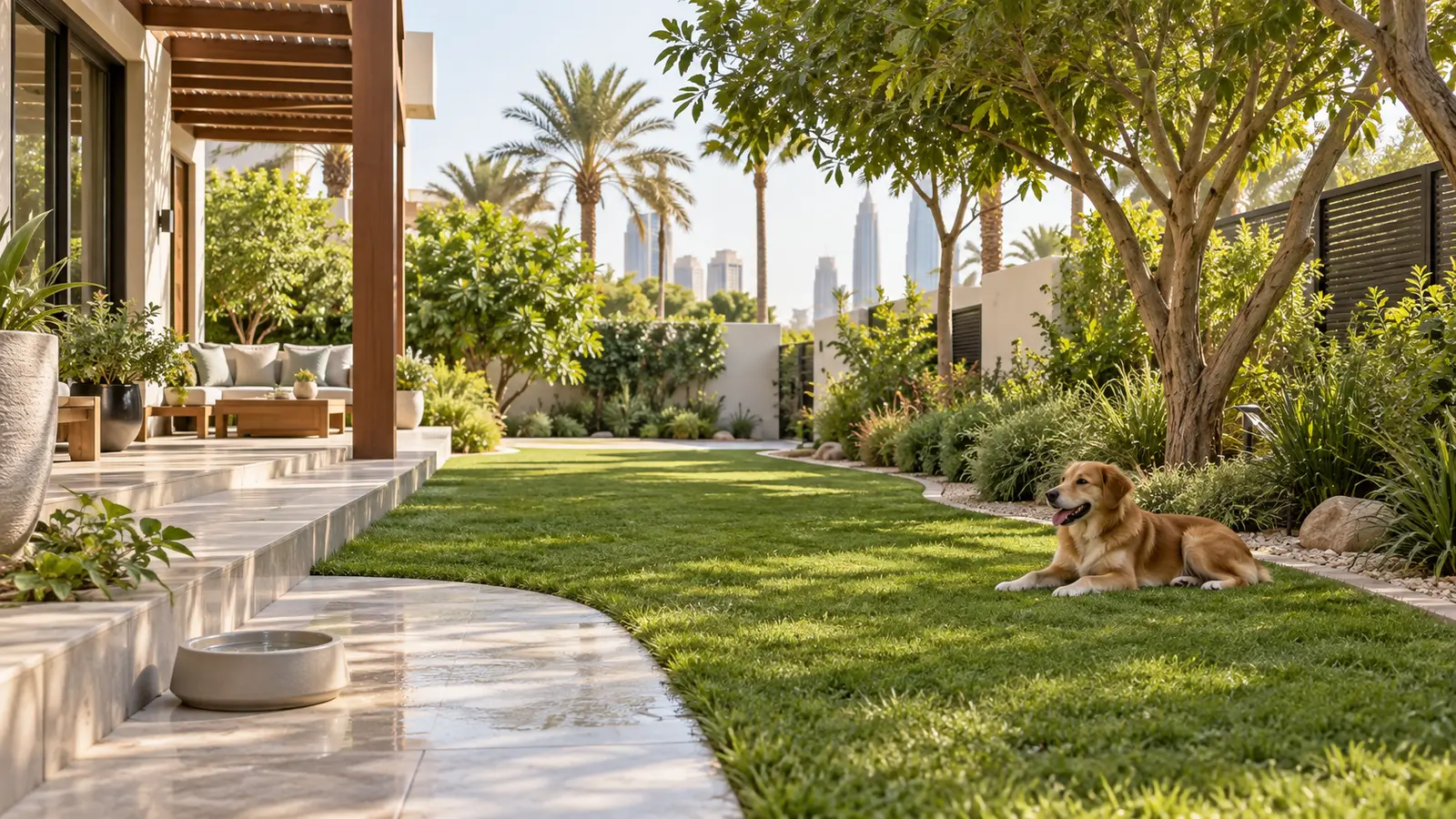
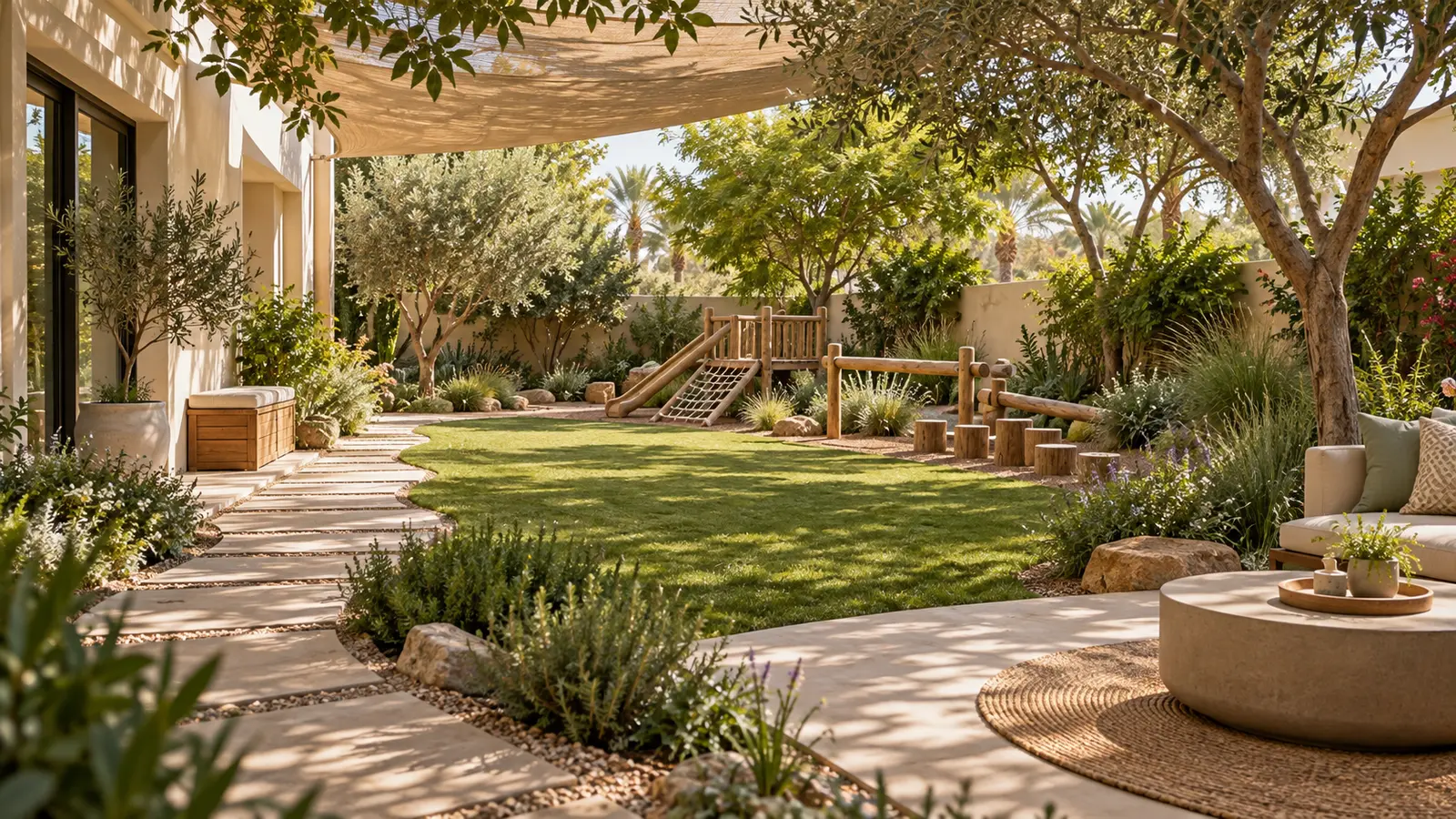
Map play, pets, dining, arrival, service access and quiet views before allocating surfaces. Put durable, cleanable materials only where activity demands them and avoid narrow leftover planting strips that are hard to irrigate or maintain. Keep access to valves, drains, lighting and equipment clear. Fewer well-proportioned zones often perform better than many decorative features, because edges, level changes and isolated pots multiply cleaning and repair tasks.
Choose a coherent planting palette
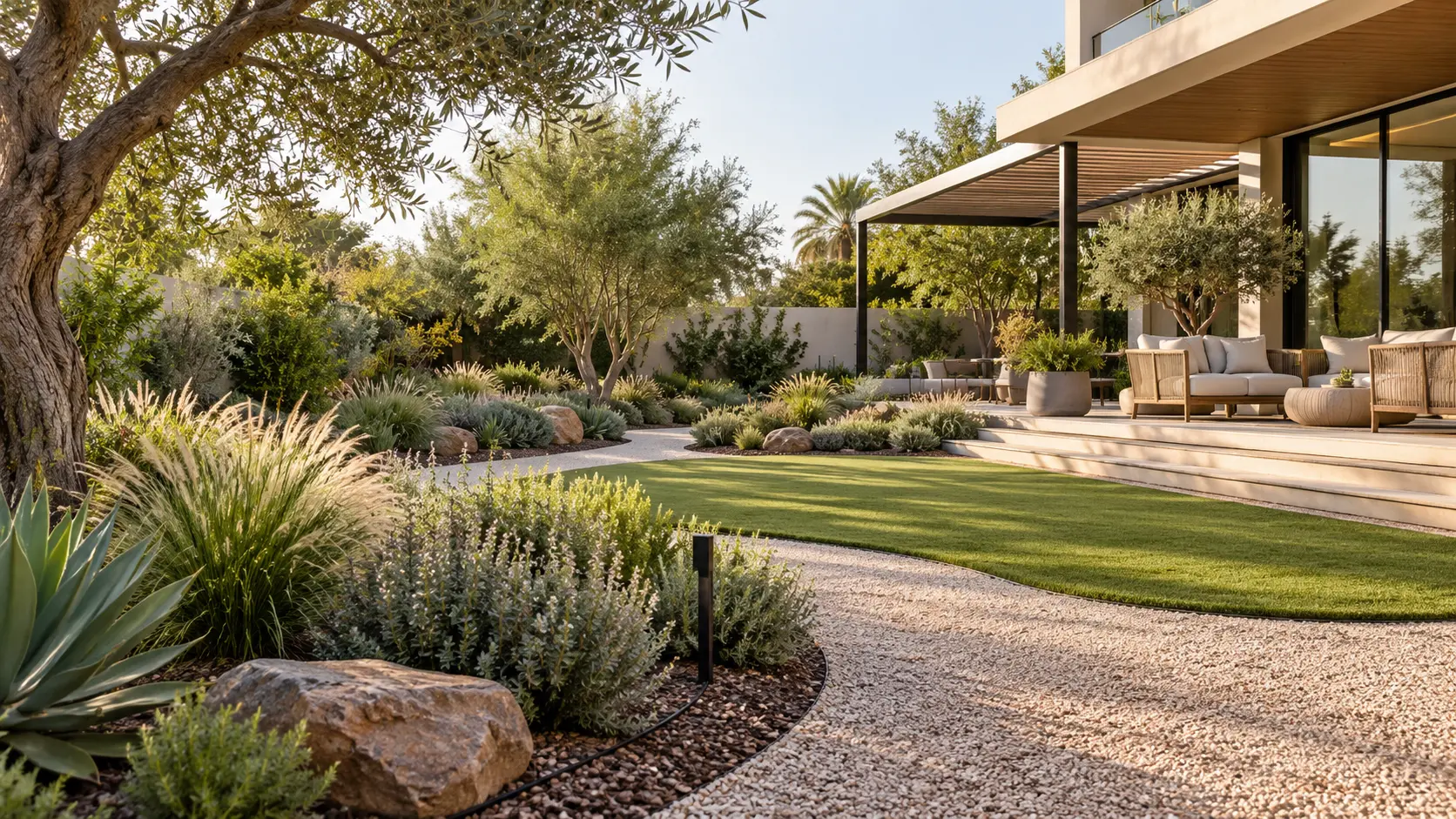
Group plants by sunlight, mature size, water needs and intended character. Prefer species shown to suit the actual urban, coastal or desert conditions and verify availability and health with responsible suppliers. Dubai Municipality’s Greenery and Plantation Manual 2026 promotes native and adaptive plants, water-efficient landscape design, biodiversity and climate-responsive development. Its public-realm scope does not make every recommendation an automatic private-villa specification, but the principles are useful inputs for professional design.
Give plants enough space and soil
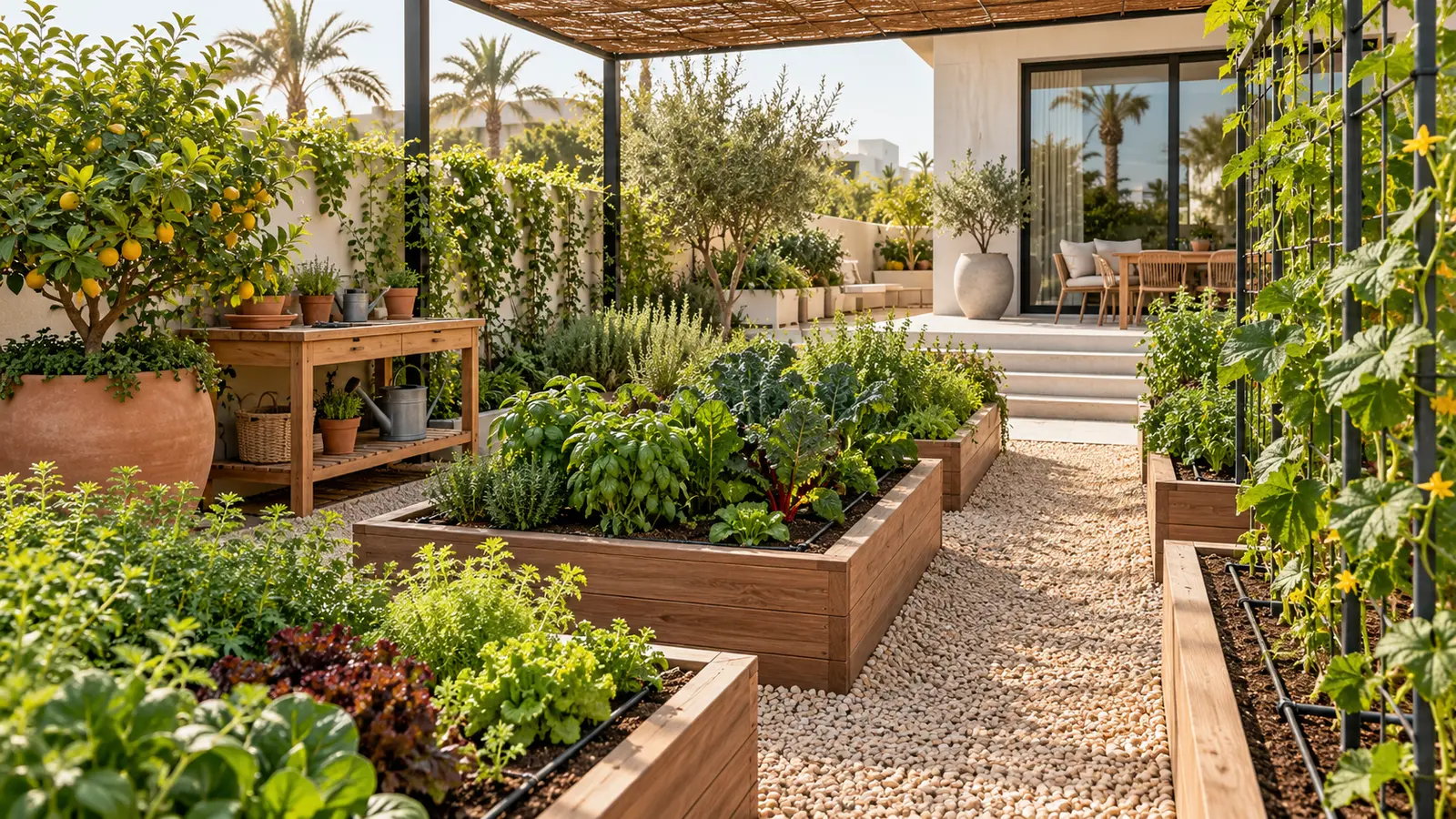
Crowded young planting may look full immediately but often drives pruning, replacement and competition later. Draw mature widths, root zones and access paths. Assess soil condition, drainage and planting preparation rather than treating soil as an invisible allowance. Use suitable mulch where appropriate to protect the surface and reduce evaporation and weed pressure, while keeping it away from vulnerable stems and building details. Soil and plant selection should be developed together by the relevant landscape professionals.
Planning example
A villa garden has a large lawn, scattered pots and six small beds with different watering needs. The redesign keeps a compact play lawn, combines beds into two larger zones, repeats a smaller plant palette, adds mulch and makes irrigation valves accessible from the path. The garden still needs care, but routine work becomes easier to inspect and organise. This invented planning example is not a completed project and does not prescribe species or irrigation settings for another site.
Zone irrigation around the planting
An irrigation plan should follow the planting schedule, exposure and soil rather than applying one runtime to the whole garden. Separate materially different needs and make emitters, filters, valves and controls accessible for inspection. Review pressure, available water, leakage monitoring and seasonal adjustment with qualified specialists. Dubai Municipality says its 2026 manual covers sustainable irrigation systems and water-efficient design. Do not use a generic calendar as a substitute for site observation and professional commissioning.
Use shade and hardscape strategically
Shade can reduce heat stress for people and some planting, but structures and trees must be positioned with mature growth, roots, wind, drainage and building interfaces in mind. Hardscape reduces planted area but adds cleaning, heat and joint maintenance; it is not maintenance-free. Prefer enough paving for circulation and furniture without covering the site unnecessarily. Coordinate falls and surface-water routes before choosing finishes, and keep irrigation away from details that should remain dry.
Plan establishment, not only maturity
New planting needs a defined establishment period with inspections, replacement criteria, irrigation adjustment and records. Ask who checks plant health, soil moisture, staking, mulch, pests and system performance, and when responsibility transfers. A low-maintenance mature design can still require focused early care. Photograph accepted planting, retain the schedule and note substitutions. If a species repeatedly fails, review the site condition and specification rather than replacing it indefinitely without investigating the cause.
Lower-maintenance garden checklist
Use this to test the brief before detailed design.
- Named caretaker, visit frequency and acceptable tasks
- Clear use zones and uncluttered service access
- Plant palette grouped by light, water and mature size
- Soil, drainage and mulch strategy
- Irrigation zones tied to the planting schedule
- Limited, purposeful lawn and container planting
- Hardscape selected for heat, cleaning and drainage
- Establishment and seasonal maintenance plan
Limits and next step
No generic list can guarantee a plant will thrive on a particular plot. Microclimate, water quality, soil, nursery stock, pests and care quality all matter. The next step is a site-condition survey and a maintenance workshop before the palette is finalised. Ask the designer to show mature sizes, irrigation zones, service access and the first-year care schedule on coordinated documents, then review substitutions against the same performance brief.
Sources & further reading
Make this useful for your project.
A review of your property and priorities can turn general guidance into a defined brief.
Explore Landscape designDiscuss your project