Start with the right questions
Existing plants can give a redesigned garden maturity and character. Assess their condition and location before deciding what should stay, move or be replaced.
- Map significant plants and their relationship to the new layout.
- Consider access and protection during construction.
- Review how new paving and levels affect planting areas.
Retention needs a work plan
Marking a tree as retained is only the start. Its surrounding area must be considered when planning excavation, storage and circulation. Ask the landscape team to explain the protection and aftercare approach, and distinguish any proposed relocation from a guarantee that a plant will establish successfully.
What to ask for
Before agreeing the next stage, request the following information in a form you can review with your project team.
- A retained and proposed planting schedule
- Protection measures integrated into the construction plan
- An establishment review after installation
Give retained plants a documented starting point
Record the location, visible condition and role of significant plants in the garden. Ask a suitably qualified landscape or tree specialist to assess issues that need professional judgement. A plant may contribute shade, privacy or character beyond its appearance in a photograph. Keep observations separate from conclusions about health or suitability. The retention decision should be based on the actual plant and proposed work, not an assumption that every mature specimen must stay.
Review the surrounding construction as part of retention
Paths, levels, excavation, storage and contractor movement can affect the area around retained planting. Ask the relevant professionals to define protection and working arrangements appropriate to the site. Include those requirements in the project information used by everyone involved. A label saying retain on a drawing is incomplete if delivery routes or material storage conflict with the intended protection. Coordination should happen before the garden becomes an active work area.
Planning example: a new terrace beside an established tree
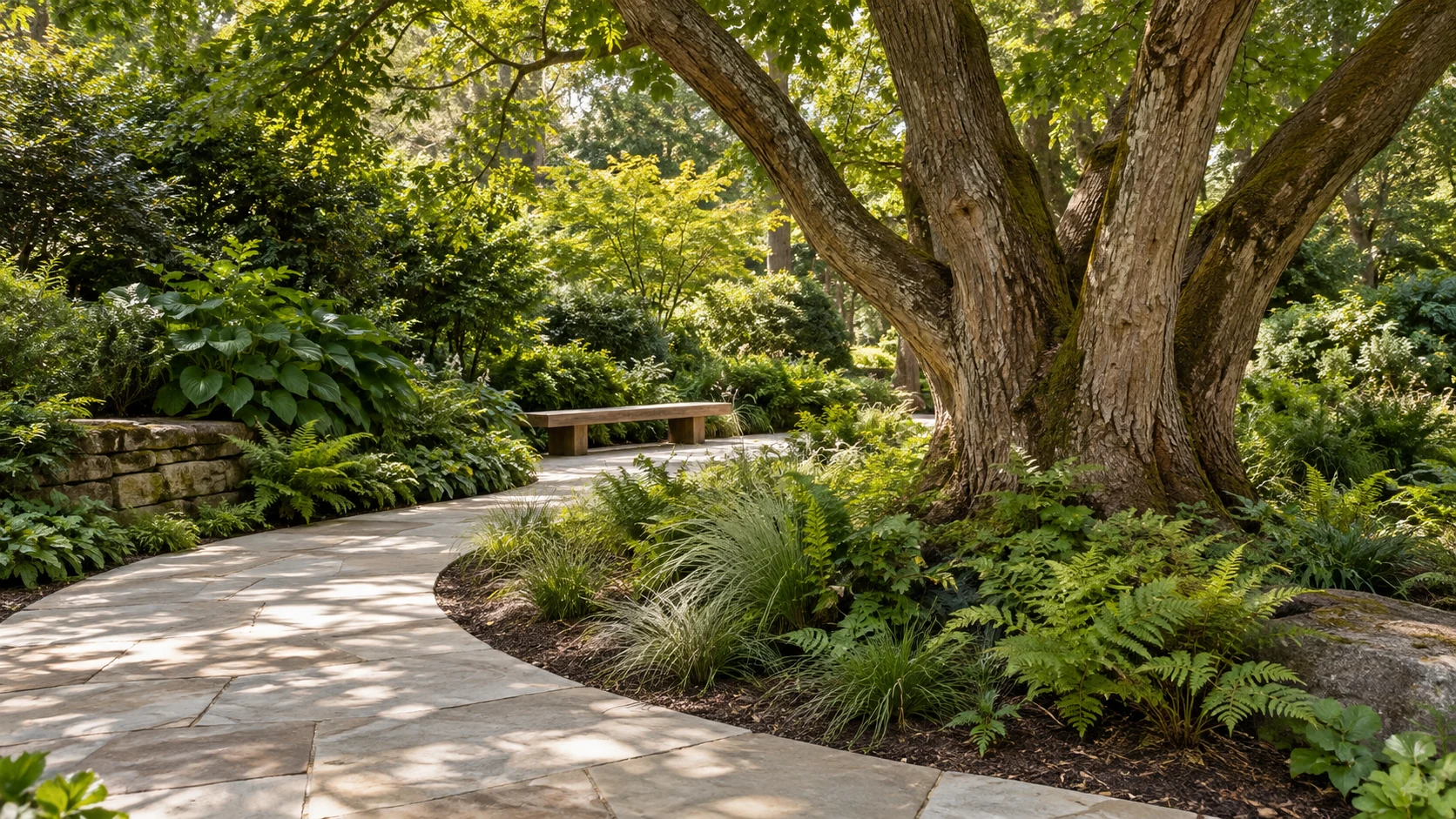
Imagine a preferred seating area occupies ground close to an established tree. Compare alternative terrace positions or shapes with specialist advice on the tree and proposed construction. The owner can then weigh the use of the seating area against the value and constraints of retention. The example is not a technical detail for building around roots; it shows why an early design choice benefits from the appropriate assessment before a fixed layout is approved.
Treat relocation as a separate proposal
Moving a plant involves different risks and responsibilities from leaving it in place. Ask the specialist to explain suitability, method, timing and establishment expectations for the actual specimen. Do not describe relocation as a guaranteed way to preserve every plant. Compare it with retention in place and replacement, keeping the scope and limitations explicit. Record who is responsible for the work and how the plant will be monitored afterwards.
Connect new planting and care to the retained garden
Review how new species, irrigation and maintenance relate to the existing plants and conditions. Different areas may need different treatment, and a new layout should not assume one schedule suits the entire plot. Keep a retained-and-new planting record with the agreed establishment responsibilities. After installation, share observations with the appointed provider and record relevant adjustments. The garden remains a living environment, so the handover should support informed care beyond the construction phase.
Bring the brief to a specialist
Share your location, current photographs, approximate dimensions and priorities. A scoped review can then identify the information needed for a useful proposal. Product choices, project dates and final prices should follow the actual property and agreed specification.
Make this useful for your project.
A review of your property and priorities can turn general guidance into a defined brief.
Explore cost guidanceDiscuss your project